
Basement remodeling in Salem for unfinished spaces, areas with moisture problems, or rooms that collect clutter because they're too uncomfortable to use regularly
Basements That Stop Wasting Square Footage
An unfinished or poorly finished basement represents lost living space, but moisture conditions common to below-grade areas in Salem require specific material choices and construction methods before walls, flooring, and finishes can go in. Basement remodeling with Odds & Ends Handyman Service begins with evaluating foundation walls for active moisture intrusion, checking floor slabs for dampness or efflorescence, and confirming that drainage around the home directs water away from the basement perimeter. Once moisture conditions are understood and addressed, the remodel includes framing interior walls with materials that resist mold, installing drywall appropriate for basement humidity levels, adding trim and doors that complete room definition, coordinating flooring that can handle occasional dampness, and building shelving or storage systems that keep belongings off the floor.
The goal is creating a basement that functions as actual living space—usable for family rooms, home offices, workout areas, guest quarters, or hobby spaces—rather than a damp storage zone that's avoided most of the time. Projects account for the cooler temperatures and higher humidity typical of basements in this region, which affects paint selection, insulation approaches, and how quickly finishes cure.
Request a basement assessment to identify moisture sources and discuss what remodeling approach matches your intended use for the space.
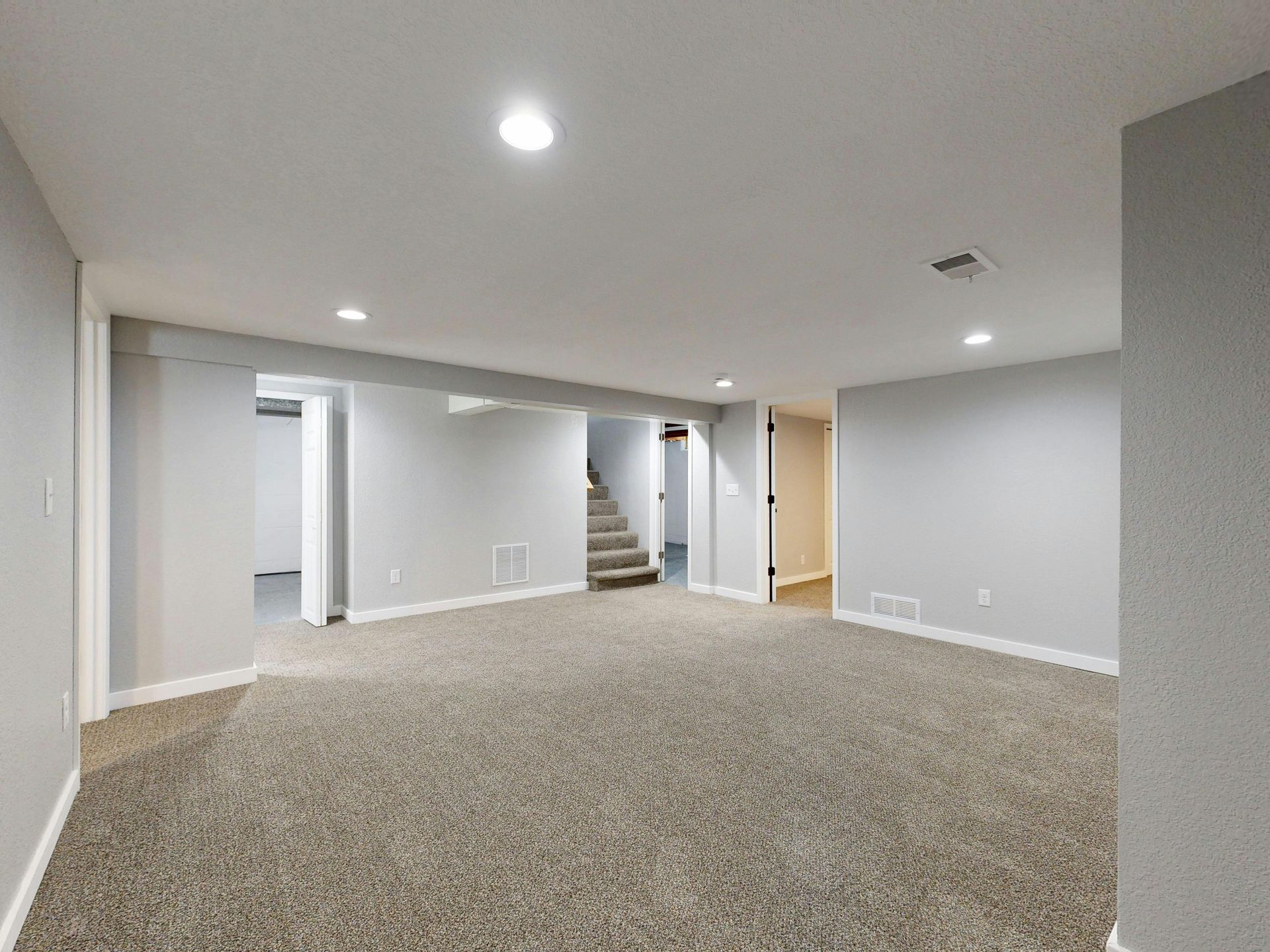
Preparing Basements for Reliable Finish Work
The process starts with addressing moisture before any finishes are installed. This can include confirming that gutters and grading keep water away from the foundation, applying sealants to foundation walls where minor seepage occurs, and selecting materials like mold-resistant drywall and pressure-treated framing that tolerate higher humidity without failing. Layout planning accounts for mechanicals—furnaces, water heaters, electrical panels—that need continued access, and framing creates defined rooms or activity zones without blocking necessary clearances.
After the remodel is complete, you notice a basement that maintains consistent temperature and feels dry enough for upholstered furniture, walls that don't develop mold spots or musty odors, trim and doors that operate smoothly without swelling from humidity, and flooring that remains stable rather than cupping or delaminating. The space feels like an extension of your home's main living areas instead of a damp, unfinished afterthought.
Basement remodels range from basic finishing—drywall, paint, trim, and doors that define rooms and make the space presentable—to more involved projects with built-in shelving, upgraded flooring, custom carpentry, and integrated storage systems. The scope depends on moisture conditions, how you intend to use the space, and what mechanical or structural obstacles need to be worked around.
What Property Owners Ask About Basement Work
Basement projects raise specific concerns about moisture, material selection, and how to turn below-grade space into functional living areas.
What basement remodeling services are available?
Work includes drywall installation and repair, framing and layout improvements, painting with moisture-appropriate finishes, trim and door installation, shelving and storage systems, carpentry, flooring coordination, and handyman improvements that make basements comfortable and usable.
How do you handle basement moisture during remodeling?
The approach includes evaluating moisture sources before starting, using materials rated for basement conditions, leaving appropriate gaps for airflow, and recommending exterior drainage improvements when active water intrusion would compromise any finished surfaces.
What makes basement remodeling different from finishing main-floor rooms?
Basements require moisture-resistant materials, framing that accounts for concrete floors and foundation walls, and layouts that work around mechanicals, while main-floor rooms typically involve standard materials and fewer structural constraints.
When should basement remodeling happen in Salem homes?
Remodel when you need additional living space, when the basement is underutilized because it's unfinished or uncomfortable, or when you're addressing moisture issues and want to finish the space properly rather than leaving it exposed.
What preparation helps basement remodeling go smoothly?
Clear stored items from the work area, identify any mechanicals or utilities that need continued access, and address any known water intrusion before finishing work begins, since moisture problems will eventually damage completed surfaces.
With twenty years of experience finishing basements throughout Salem and Peabody, Odds & Ends Handyman Service handles below-grade remodeling with attention to moisture control, material durability, and creating spaces that function reliably year-round. Reach out to discuss your basement's current condition and explore what remodeling options fit your home's structure and your space needs.